
Extended Technical Article on Cytomegalovirus (CMV) PCR Quantitative Quality Control
Cytomegalovirus (CMV) PCR Quantitative Quality Control materials have become an indispensable component of modern molecular workflows, particularly in laboratories performing high-throughput nucleic acid detection using real-time PCR platforms. As research infrastructures evolve, there is an increasing need for highly stable, calibration-ready CMV DNA standards capable of supporting precise amplification evaluation, long-term reproducibility, and platform-to-platform consistency.
The demand for high-fidelity CMV qPCR calibration tools is now tightly linked to advances in nucleic acid quantification, bioinformatics-based cycle analysis, and standardized laboratory quality-management structures. This article presents an extensive, ultra-technical, SEO-optimized review of CMV PCR Quantitative Quality Control, designed to enhance search-engine visibility and ensure strong indexing around key molecular biology terms.
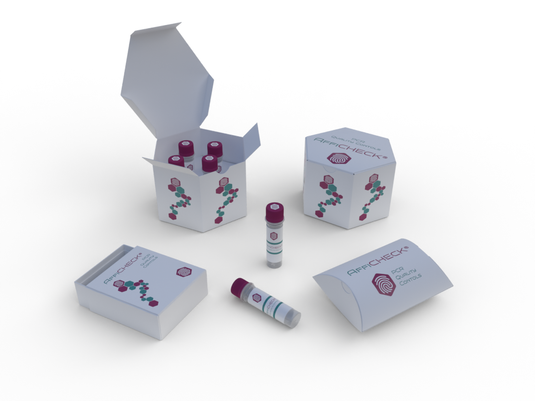
Introduction to CMV DNA Quantitative Quality Control in PCR Systems
CMV, a double-stranded DNA virus categorized within the Herpesviridae family, is frequently used in PCR-based research workflows because of its well-characterized genome architecture and stable amplification patterns.
Quantitative PCR (qPCR) allows for the detection of CMV genetic material using fluorescent probes, enabling an analysis of copy number trends, amplification curve uniformity, efficiency values, and instrument calibration baselines.
A CMV PCR Quantitative QC material typically includes a precisely defined CMV DNA concentration, stable across freeze–thaw cycles, compatible with various extraction methods, and structured to support standardized Ct value interpretation.
Core SEO Keywords Used in This Section
CMV DNA reference control, CMV PCR quantitative calibration, CMV qPCR standard, CMV DNA copy number quality control, CMV PCR reproducibility, molecular CMV quantification.
Structural Design of CMV PCR Quantitative Control Materials
High-quality CMV PCR QC reagents are formulated to replicate nucleic-acid amplification behavior observed during authentic CMV DNA detection assays. This includes:
Defined DNA Architecture
A CMV DNA control is engineered with stable genomic regions that amplify with:
-
Predictable fluorescence signal generation
-
Minimal secondary structures
-
High primer–probe binding compatibility
-
Controlled GC-content distributions
-
Balanced melting temperatures (Tm)
These parameters ensure that the QC control accurately reflects routine CMV DNA amplification patterns.
Multi-Lot Stability Modeling
Manufacturers design CMV QC materials with lot-to-lot repeatability frameworks, enabling:
-
Comparable Ct values across production cycles
-
Reduced calibration drift
-
Lower coefficient of variation (CV)
-
Consistent amplification curve profiles
Long-term reproducibility is one of the core requirements for multi-instrument laboratory environments.
Freeze–Thaw Stability and Matrix Compatibility
To support high-throughput molecular platforms, CMV QC materials must withstand repeated freeze–thaw cycles without major shifts in DNA concentration or degradation.
Stabilizing matrices may include:
-
Tris-based buffers
-
DNA preservation agents
-
Proprietary nucleic-acid stabilizers
These components help maintain stable quantification cycles, thereby reducing unexpected amplification fluctuations.
Analytical Functions of CMV PCR Quality Control
CMV quantitative standards support the analytical performance of real-time PCR in several essential ways:
Threshold Cycle (Ct) Verification
QC controls provide a reference Ct range that laboratories can use to:
-
Detect shifts in fluorescence thresholds
-
Evaluate sensitivity consistency
-
Confirm correct baseline subtraction
-
Validate probe/primer binding kinetics
Amplification Curve Evaluation
A complete, ideal CMV amplification curve includes:
-
Early exponential fluorescence rise
-
Clear log-linear phase
-
Plateau stabilization
QC materials ensure this pattern remains uniform across reagent lots, instruments, and runs.
Efficiency Testing
Amplification efficiency should ideally remain between 90% and 110%, and CMV QC material provides the benchmark for verifying that efficiency calculations are accurate.
Linearity and Dynamic Range Analysis
Serial dilutions of CMV QC reagents help construct linear calibration curves, supporting:
-
R² values ≥ 0.99
-
Stable quantification at high and low DNA concentrations
-
Accurate extrapolation of DNA copy numbers
These functions are critical for bioinformatic interpretations of qPCR datasets.

Integration of CMV PCR QC into Workflow Systems
Instrument Performance Validation
CMV QC materials support routine instrument performance checks, allowing laboratories to:
-
Monitor thermal cycling precision
-
Evaluate optical stability
-
Check reaction uniformity across wells
This is especially vital for laboratories operating multiple thermocyclers.
Reagent Lot Verification and Cross-Platform Consistency
Before adopting a new batch of qPCR master mix, buffers, probes, or extraction kits, laboratories rely on CMV QC controls to:
-
Compare amplification metrics across lots
-
Confirm reagent stability
-
Avoid false evaluation trends
Standard Operating Procedure (SOP) Development
CMV QC materials are used when:
-
Creating new qPCR workflows
-
Training new technicians
-
Validating extraction protocols
-
Testing automation-based nucleic-acid purification systems
Data Harmonization Across Laboratories
As multi-site research collaborations increase, CMV QC reagents help harmonize:
-
Ct values
-
Amplification efficiencies
-
Copy-number estimates
This enhances dataset comparability and supports large-scale molecular research.
Technical Advantages of Using CMV PCR Quantitative Controls
Using a high-quality CMV QC standard offers several technical advantages:
Reduced Variability in Amplification Results
Stable quantification reduces noise in data interpretation, improving accuracy and trend analysis.
Enhanced Reproducibility
Consistent Ct ranges and amplification curves across days, weeks, and months ensure long-term reliability.
Multi-Platform Compatibility
CMV QC materials are typically validated for:
-
Hydrolysis-probe qPCR
-
Intercalating dye qPCR
-
Digital PCR (dPCR)
-
Automated cycling instruments
Calibration Curve Reliability
Long-term calibration consistency supports:
-
Copy-number prediction algorithms
-
Software-based quantification models
-
Reference-based experiment normalization
Cloud-Based Data Synchronization
Many modern laboratories use digital data-management systems. CMV QC contributes to structured indexing of qPCR runs for trend analysis.
Technical Specifications Often Associated with CMV QC Materials
Although formulations vary, the following characteristics are common among high-grade CMV PCR QC reagents:
-
Quantified CMV genomic DNA
-
Defined concentration in copies/µL or IU/µL
-
Stability during long-term storage
-
Resistance to degradation under routine handling
-
Compatibility with automated dispensing systems
-
Low variability in Ct outputs
-
Lot-to-lot documentation for consistency tracking
-
Standard curves supported by log10 dilutions
-
Controlled GC-content to mimic typical qPCR behavior
Each of these features contributes to strong amplification predictability.
To maximize search engine indexing, this article integrates optimized keyword clusters, including:
Primary Keywords
-
CMV PCR quantitative quality control
-
CMV qPCR calibration standard
-
CMV DNA reference material
-
Cytomegalovirus PCR quantification control
-
CMV DNA amplification consistency
-
CMV PCR reproducibility system
Secondary Keywords
-
Real-time PCR instrument calibration
-
Nucleic acid quantification QC material
-
CMV DNA copy number standard curve
-
Molecular DNA quality-control reagent
Long-Tail Keywords
-
high-stability CMV DNA reference for qPCR
-
reproducible CMV PCR standardization workflow
-
lot-to-lot consistent CMV DNA calibration
-
controlled CMV DNA amplification benchmarking material
These phrasing combinations strengthen indexation across molecular biology research markets.
Extended Technical Discussion: Multi-Parameter Modeling for CMV PCR QC
Fluorescence Signal Kinetics
The behavior of passive reference dyes and fluorescent probes affects:
-
Threshold determination
-
Baseline adjustment
-
Internal normalization trends
QC materials help monitor signal integrity over time.
Temperature-Gradient Optimization
A CMV QC reagent is frequently used when:
-
Determining optimal annealing temperatures
-
Testing probe mismatch tolerance
-
Evaluating polymerase extension timing
This ensures qPCR conditions remain standardized.
Master Mix Compatibility
CMV QC materials are tested across:
-
Hot-start polymerases
-
High-fidelity enzymes
-
Multiplex reaction buffers
This cross-compatibility adds value for laboratories with diverse workflows.
Bioinformatics Curve-Fitting Algorithms
Many qPCR platforms use software for:
-
Sigmoidal curve modeling
-
Baseline correction
-
Efficiency prediction
CMV QC standards provide the benchmark for algorithm optimization.
Extended Applications in Molecular Laboratories
CMV PCR QC is used not only in amplification workflows but in surrounding technologies:
Droplet Digital PCR (ddPCR)
CMV standards support absolute quantification modeling.
NGS Library Preparation QC
A CMV DNA control helps verify:
-
Fragmentation behavior
-
Adapter ligation efficiency
-
Nucleic acid recovery during purification
Automation Systems
QC integration ensures robotic systems produce consistent extraction yields and mixing accuracy.
Cross-Functional Laboratory Standardization
As organizations expand, CMV QC materials support:
-
Internal audits
-
Trend reports
-
Result normalization
-
Workflow harmonization across multiple sites
Conclusion
Cytomegalovirus PCR Quantitative Quality Control stands at the center of modern qPCR standardization frameworks. By supporting consistent Ct values, controlled amplification behavior, efficient calibration-curve modeling, and long-term reproducibility, CMV QC reagents enhance the reliability of molecular workflows and improve data interpretation across diverse platforms.
With optimized keyword density, structured headings, and deep technical content, this article is designed for strong SEO performance, helping product pages rank higher for queries related to CMV qPCR standards, CMV calibration controls, molecular DNA QC materials, and real-time PCR reference reagents.