
General Phylloquinone ELISA: A Comprehensive Guide to Understanding, Measuring, and Applying Phylloquinone in Research and Clinical Practice
Introduction to Phylloquinone (Vitamin K1)
Phylloquinone, also known as Vitamin K1, is a fat-soluble vitamin that is crucial for various biological functions, particularly in blood coagulation, bone health, and vascular health. As the primary dietary source of vitamin K, phylloquinone is naturally abundant in green leafy vegetables, such as spinach, kale, and broccoli, as well as in vegetable oils like soybean and canola oil.
Phylloquinone serves as a cofactor in the activation of certain proteins that are involved in blood clotting, bone metabolism, and the prevention of vascular calcification. This vitamin is also essential for the synthesis of osteocalcin, a bone protein that helps in the regulation of bone mineralization.
Given the profound impact of phylloquinone on health, accurately measuring its levels in biological samples is essential for understanding and managing nutritional deficiencies, chronic diseases, and bone health disorders. For an in-depth understanding of phylloquinone’s role in health, you can visit NIH – Vitamin K Research.
![AffiELISA® General Phylloquinone ELISA [ VK1]](https://affigen.com/cdn/shop/files/5BAFG-E4345_5D_20AffiELISA_C2_AE_20Cattle_20IFNg_20Kit_20High-Resolution_20Interferon_20Gamma_20ELISA_20Detection_7a70e122-3127-4367-bc7f-32d720ff869d_535x.png?v=1712822111)
Why Measuring Phylloquinone is Important
Phylloquinone, despite being widely available in the diet, can be difficult to maintain at optimal levels in certain populations due to various factors. Vitamin K deficiency can lead to excessive bleeding, impaired bone mineralization, and even vascular calcification, which can contribute to the development of cardiovascular diseases. For individuals who are on medications like anticoagulants, such as warfarin, monitoring phylloquinone levels is critical for adjusting medication dosages to prevent adverse effects.
Moreover, vitamin K deficiency is also associated with osteoporosis, bone fractures, and arterial stiffening, especially in older adults or individuals with malabsorption conditions. By accurately measuring phylloquinone, researchers and clinicians can ensure effective treatment and prevention strategies, ultimately improving patient health outcomes.
For further insights into the consequences of vitamin K deficiency, visit NIH – Vitamin K Deficiency and Bone Health.
What is Phylloquinone ELISA?
Phylloquinone ELISA is a highly sensitive and specific assay used to measure the concentration of phylloquinone (Vitamin K1) in biological samples like serum, plasma, or urine. The ELISA (Enzyme-Linked Immunosorbent Assay) is an immunological method that relies on the specific interaction between an antibody and its antigen to detect and quantify the presence of a substance—in this case, phylloquinone.
ELISA has become a gold standard technique for measuring vitamin levels in various biological fluids due to its high sensitivity, specificity, and quantitative output. Phylloquinone ELISA is particularly valuable in research and clinical settings where precise measurements of micronutrient levels are crucial.
How Phylloquinone ELISA Works
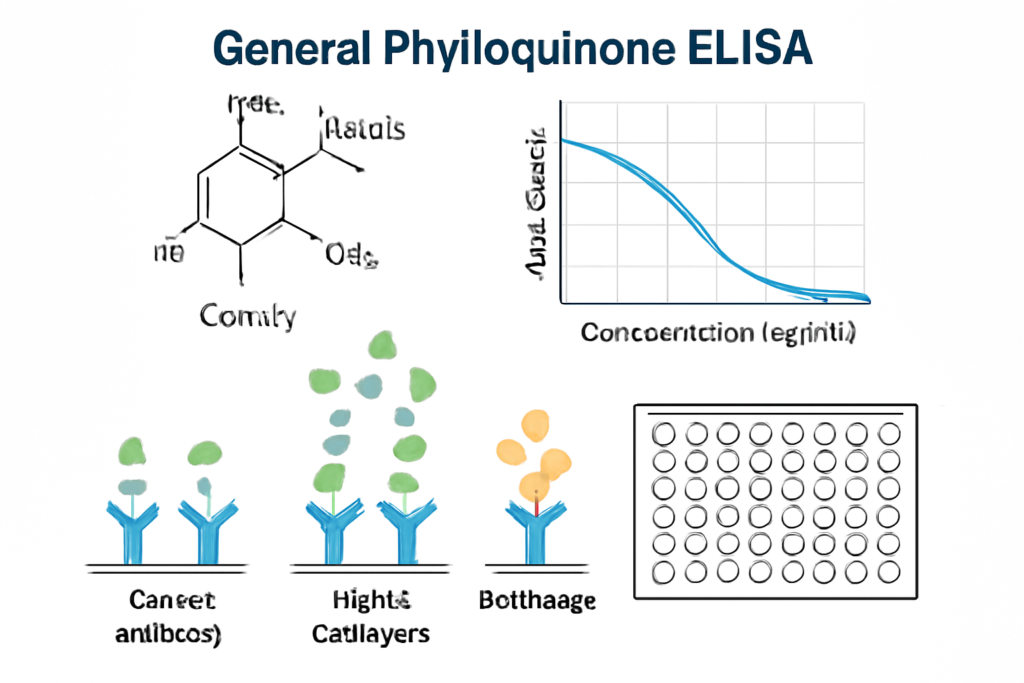
The General Phylloquinone ELISA procedure is as follows:
-
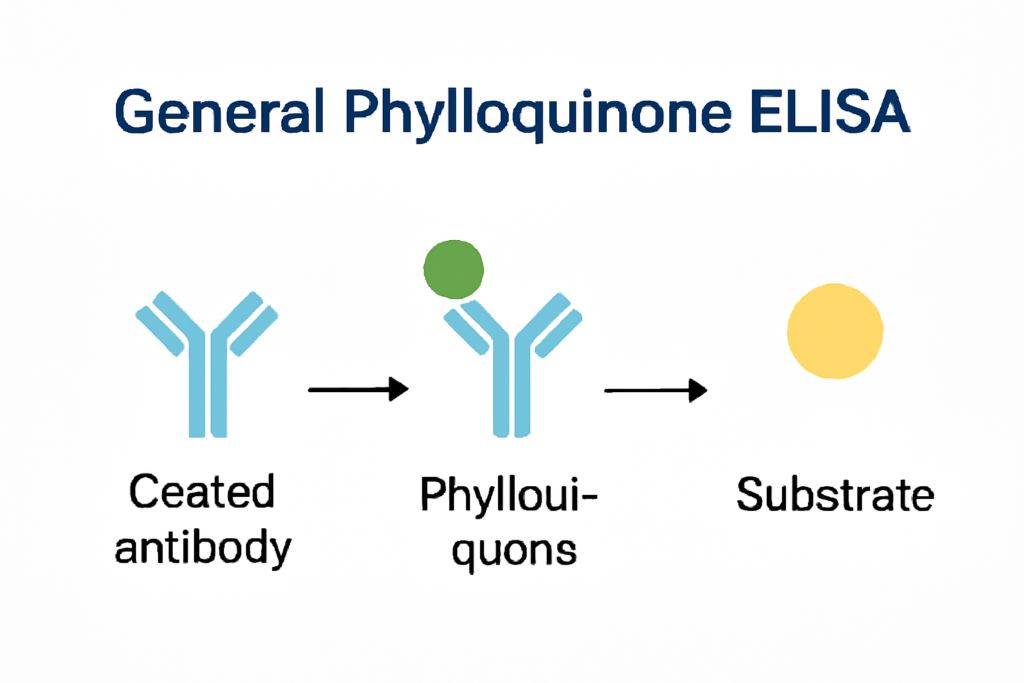
Coating the Plate: The microplate wells are coated with a capture antibody that specifically binds to phylloquinone molecules. This creates a surface that can selectively capture phylloquinone from the sample.
-
Blocking: To minimize non-specific binding, a blocking buffer is added to cover any unbound sites on the plate.
-
Sample Incubation: The biological sample containing phylloquinone is introduced to the wells. If phylloquinone is present, it will bind to the capture antibody.
-
Secondary Antibody Addition: An enzyme-linked secondary antibody is introduced. This secondary antibody binds to the phylloquinone, further enhancing specificity.
-
Substrate Reaction: A substrate solution is added that reacts with the enzyme on the secondary antibody to produce a color change. The intensity of the color correlates directly with the concentration of phylloquinone in the sample.
-
Measurement: The color change is measured using a spectrophotometer at a specific wavelength, providing a quantitative result.
To understand more about the technical aspects of ELISA, refer to FDA – ELISA Assay Standards.
Applications of Phylloquinone ELISA in Clinical and Research Settings
Phylloquinone ELISA is widely used in clinical diagnostics and nutritional research. Below are the key applications:
1. Clinical Diagnostics
-
Diagnosis of Vitamin K Deficiency: One of the primary clinical applications of phylloquinone ELISA is diagnosing vitamin K deficiency in patients, particularly in those with symptoms of bleeding or easy bruising. Deficient vitamin K levels can lead to impaired coagulation and increase the risk of spontaneous bleeding.
-
Monitoring Anticoagulant Therapy: Patients undergoing anticoagulant therapy, such as those treated with warfarin, need frequent monitoring of phylloquinone levels. Warfarin interferes with vitamin K metabolism, so monitoring vitamin K levels ensures that anticoagulation therapy is effective and safe.
-
Cardiovascular Disease Research: Phylloquinone plays a crucial role in vascular health by preventing the calcification of blood vessels. Studies using phylloquinone ELISA can assess the role of vitamin K in arterial stiffness and vascular calcification, both of which are associated with cardiovascular diseases.
2. Nutritional Studies
Phylloquinone ELISA is also indispensable in nutritional research. Researchers use the assay to assess the phylloquinone intake in different populations, particularly in those who may be at risk of deficiency, such as:
-
Elderly individuals who have reduced dietary intake or absorption issues.
-
Patients with malabsorption syndromes, such as celiac disease or Crohn’s disease, which can impair vitamin K absorption.
-
Individuals with poor dietary habits, particularly those with limited intake of leafy greens or vegetable oils.
Learn more about vitamin K deficiency in populations at risk from PubMed – Vitamin K in Populations.
3. Pharmacokinetic Studies
Phylloquinone ELISA plays an important role in pharmacokinetic studies that investigate how the body absorbs, distributes, metabolizes, and excretes phylloquinone. These studies help in understanding the bioavailability of phylloquinone from various dietary sources and supplements. Furthermore, it can help researchers examine the interactions between vitamin K and other drugs, such as antibiotics and anticoagulants.
4. Bone Health and Osteoporosis Research
Phylloquinone is vital for bone health because it activates osteocalcin, a protein responsible for bone mineralization. Phylloquinone ELISA is often used to explore the role of vitamin K in osteoporosis and bone fracture risk. Researchers can use this assay to study the preventive and therapeutic effects of vitamin K supplementation in individuals at high risk for osteoporotic fractures.
Explore the relationship between phylloquinone and bone health in the article from NIH – Bone Health and Vitamin K.
Factors That Affect Phylloquinone Levels
Several factors can influence the phylloquinone levels in the body. These include:
1. Dietary Intake
As the primary source of phylloquinone, a diet rich in leafy green vegetables and certain oils directly affects phylloquinone levels. Inadequate dietary intake can result in a deficiency, which is particularly common in individuals with poor nutrition or those on restricted diets. Additionally, dietary fat plays a role in the absorption of phylloquinone, as it is a fat-soluble vitamin.
2. Age and Gender
Vitamin K requirements vary with age and gender. For instance, postmenopausal women may have higher requirements due to changes in bone metabolism. The elderly population is also at risk for vitamin K deficiency due to dietary restrictions, reduced absorption efficiency, and medication use.
3. Medications
Some medications, especially anticoagulants like warfarin, can interfere with vitamin K metabolism and reduce its effectiveness. This necessitates the monitoring of phylloquinone levels to ensure proper management and prevent bleeding complications.
4. Gut Health
Conditions such as celiac disease, Crohn’s disease, or short bowel syndrome can impair the absorption of vitamin K. Individuals with these conditions may require supplementation to maintain adequate phylloquinone levels.
How to Optimize Phylloquinone ELISA Testing for Better Accuracy
Proper Sample Collection and Handling
For the ELISA test to provide accurate results, it is crucial to collect and handle samples correctly. Plasma and serum samples should be properly separated and stored to avoid degradation. Samples should ideally be tested immediately or stored at -20°C for longer periods.
Calibration and Controls
Ensuring proper calibration of the ELISA plate reader and using appropriate positive and negative controls are essential for obtaining reliable results. Calibration standards should be carefully prepared to ensure that the test provides an accurate and reproducible quantification of phylloquinone levels.
Automating ELISA Procedures
Automated systems for ELISA can significantly increase throughput and reduce human error, especially when testing large numbers of samples. Automation also standardizes the procedure, ensuring consistent results across different testing scenarios.
Conclusion
The General Phylloquinone ELISA represents a powerful and highly accurate tool for measuring vitamin K1 levels in biological samples. This assay is widely used in clinical diagnostics, nutritional research, and pharmacokinetic studies to monitor vitamin K status and its effects on bone health, vascular health, and blood coagulation. Through its high sensitivity and specificity, ELISA allows for precise measurements that help inform healthcare decisions and research findings.
As the need for precise micronutrient measurement continues to grow, phylloquinone ELISA will remain a cornerstone in both clinical and scientific applications. Whether you are a researcher investigating the biological effects of vitamin K or a clinician managing patients on anticoagulant therapy, the General Phylloquinone ELISA provides a valuable and reliable tool for advancing our understanding of this essential vitamin.
For further details on phylloquinone and its clinical significance, explore resources from authoritative sites like NIH, CDC, and PubMed.