Linsmaier & Skoog Basal Medium: Technical Characteristics and Applications in Plant Tissue Culture
The Linsmaier & Skoog (LS) Basal Medium, developed in 1965, is a modification of the widely used Murashige and Skoog (MS) medium. It features a distinct vitamin profile that enhances shoot regeneration, particularly in dicotyledonous species. LS medium is a foundation in in vitro culture systems, used in genetic transformation, clonal propagation, and organogenesis protocols.
Composition and Nutrient Profile
LS medium includes high levels of macro- and micronutrients to support rapid cell division and morphogenesis. Unlike MS medium, LS medium has an increased concentration of thiamine-HCl (vitamin B1), which plays a key role in carbohydrate metabolism and shoot meristem development (USDA NAL).
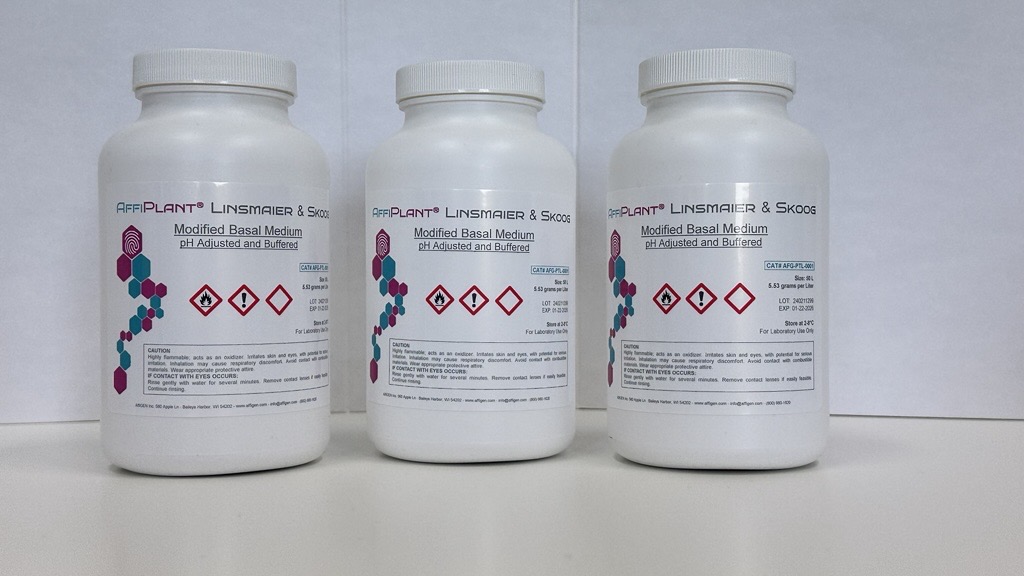
The complete formulation includes:
- Nitrogen sources: NH₄NO₃ and KNO₃
- Calcium, magnesium, phosphorus: As CaCl₂·2H₂O, MgSO₄·7H₂O, KH₂PO₄
- Micronutrients: MnSO₄, ZnSO₄, CuSO₄, CoCl₂, Na₂MoO₄, H₃BO₃
- Vitamins: Thiamine-HCl, pyridoxine-HCl, nicotinic acid (University of Georgia Plant Tissue Culture Guide)
Trace elements must be added in precise proportions to prevent nutrient imbalance, which can suppress regeneration. Researchers at University of Minnesota recommend batch testing for trace element contamination in commercial-grade salts.
Functional Role in Micropropagation
LS medium promotes direct shoot regeneration from nodal or apical explants. It is especially effective for tobacco (Nicotiana tabacum) and other Solanaceae members (NCBI). The high thiamine concentration facilitates shoot induction without the need for prolonged callus formation, reducing the risk of somaclonal variation (University of Kentucky Agriculture Department).
Applications include:
- Axillary bud proliferation in ornamental plants
- Transformation experiments with Agrobacterium tumefaciens
- Rooting pre-treatment before transfer to hormone-free basal medium (ARS USDA)
- Protoplast regeneration, particularly in protocols established by Rutgers University
Advantages Over MS Medium
While MS medium remains standard for many species, LS medium provides:
- Improved shoot organogenesis in woody and herbaceous dicots (University of Wisconsin Horticulture)
- Enhanced performance under low cytokinin levels
- Greater reproducibility in genetic studies (NIH Genetics Guide)
- Better support for photomixotrophic conditions, especially when used with sucrose-light combinations as studied at University of Arizona
Comparative studies at North Carolina State University and University of Florida IFAS show that LS outperforms MS in regenerating tissues from petiole, internode, and cotyledon explants
Application-Specific Use Cases
1. Genetic Engineering: LS medium is ideal for selection and regeneration of transgenic tissues. It is often supplemented with kanamycin or hygromycin for transgene selection (NSF Plant Genome Program).
2. Organogenesis and Somatic Embryogenesis: High vitamin levels in LS enhance somatic embryo conversion to plantlets. This is applicable in research on Arabidopsis, Medicago truncatula, and tree species (DOE Office of Science).
3. Virus-Free Clonal Propagation: Used in the early stages of shoot-tip culture to eliminate systemic viruses from germplasm (USDA NRCS).
4. Tissue-Specific Regeneration: LS medium promotes regeneration from leaf discs, stem nodes, and immature embryos. Several protocols developed by Iowa State University, Oregon State University, and Michigan State University rely on LS-based media for legumes, vegetables, and medicinal plants.
5. Recalcitrant Species Support: LS medium is also effective in culturing recalcitrant species such as oak (Quercus spp.) and pecan, where MS fails to induce shoot elongation. This was documented in collaborative trials between US Forest Service and Texas A&M Forest Service.
Integration With Agar and Gelling Agents
LS medium is often solidified using agar (0.7–0.8%) to create a semi-solid surface suitable for in vitro shoot culture. Agar concentration is critical for nutrient diffusion and tissue support. Studies at University of California ANR confirm optimal results when LS is paired with high-purity agar or Gelrite.
Alternatives like phytagel or gellan gum can be used to improve optical clarity in root imaging studies, as recommended by University of Missouri Plant Sciences.
Quality Control and Sterility Protocols
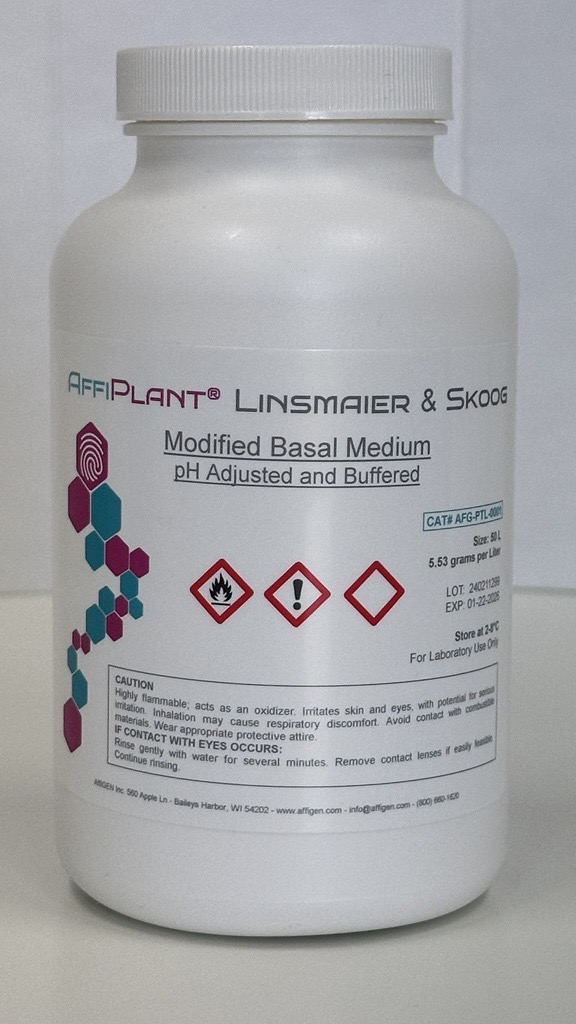
LS medium preparation requires pH adjustment to 5.7 before autoclaving at 121°C for 15–20 minutes. All components should meet analytical-grade standards outlined by the U.S. Pharmacopeia and FDA. Sterilization techniques are detailed by Texas A&M University and University of Nebraska-Lincoln.
Laboratories at University of Connecticut and UC Riverside emphasize maintaining aseptic conditions by working under laminar flow hoods, monitoring contamination rates, and using pre-sterilized containers.
Conclusion
Linsmaier & Skoog Basal Medium is a robust alternative to MS medium in plant biotechnology, offering enhanced shoot regeneration, reliable genetic stability, and strong compatibility with diverse explants. It remains central in tissue culture labs supported by federal and academic institutions including USDA, NIH, and NSF.
As research progresses toward automation and bioreactor systems, LS medium continues to play a role in high-efficiency, reproducible plant regeneration. Further exploration can be found through Purdue University, University of Illinois, UC Davis Plant Sciences, and University of Maryland.